
Are you trying to sell your property and feel that you are facing a challenging time?

You are not alone. In today’s market, buyers have lots of options and are spoilt for choices. Your property is likely just one property located in a sea of “For-Sale” signs. So it takes more effort than ever to sell your property in today’s market.
So do seize all opportunities that are present to you! And here are the 5 mistakes to avoid when selling your house:
Mistake 1: DON’T set your price too high.
Your house is only worth what the market is willing to pay for. If you have set your expectation too high, you may take longer than expected to move your property. Pricing your home too high will discourage interested parties from even contacting you to find out more about your property. In today’s market where much negative news is taking up the centre stage, it may not be wise to wait too long.
What should you do?
Check out the recent transaction prices to have an estimate on what is the fair price to offer your property. You can easily find out this information from:
HDB (http://www.hdb.gov.sg/fi10/fi10321p.nsf/w/BuyResaleFlatResaleIndex?OpenDocument)
Alternatively, you may drop us your property information with your unit number (if applicable) and we can work out your property value which you can use as a guide.
Mistake 2: DON’T leaves your house in a bad state.

First impression matters! If you are a prospective buyer, which home (above photograph) will turn you off? The answer is obvious. We have come across situations where buyers simply walk out when they have just looked through the door. Never let that happen to you.
What should you do?
Tidy up the place. If there are too many personal belongings lying around, pack them into boxes. Anyway, if you are going to move these items to your next home, it is a matter of time when you are packing these items. Since tidying up the place will leave a better impression for your prospective buyer, why not do it now. If there are items like loose doorknobs, sagging screen door etc. which needs to be fixed, fix it. The buyer who walks through your house and spot a handful of items that need immediate repair will wonder how well you’ve maintained the things they can’t see.
Mistake 3: DON’T be offended by a lowball offer

Just because a prospective buyer makes a really low bid is not a reason for you to walk off from the opportunity in a huff. It is now your chance to negotiate. You need to remember that buyers are trying to buy your property at the lowest price possible. They may really be interested in your property.
What should you do?
Take this as a business transaction and nothing personal. Get back into the negotiation and make a counteroffer, you may never know that the buyer may come back with a second offer. Like I always like to say, you never try, you never know. If you try, you still have the chance to get what you want.
Mistake 4: DON’T lose a sale over something stupid
We have come across a deal that is near 99% completed but was thrown out over a minor detail. An owner wasn’t able to go down a few thousand for a million-dollar property.
What should you do?
Unless the request of the buyer is unreasonable and cost you a bomb, it may be wise for you to do the math and weigh the pros and cons before making your decision in haste over a few thousand.
Mistake 5: DON’T neglect marketing.

Selling your property is not as simple as putting a “For Sale” signage up in front of your property and waiting for buyers to come knocking on your door. The only guaranteed way for you to get the highest price for your house is to expose your property to as many prospects as possible.
What should you do?
There are many tools out there for you to market your property to your prospective buyers. Here are a few ways:
Engage Real Estate Salesperson – There are some tools that are only made available for Real Estate Salesperson and to access such tools, you may need to engage their assistance. Furthermore, as their life revolves around the real estate industry, they should have a valuable network of co-broking agents and buyers who may be interested in your property.
Online Listing Platform – There are several listing platforms that are made available for direct sellers/landlords if you do not wish to engage a Real Estate Salesperson. There are Gumtree, Oh My Home, Direct Home etc which you can consider. You can also list your property via our resale portal.
Traditional Medium – You can advertise in newspapers & magazines, distribute mailers or paste your notices on bulletin boards etc.


Edwin Goh
With his love for numbers and data, Edwin has provided valuable insights to his clients and readers to empower them to make better-informed real estate decisions.
You may also like...
 Hungry Ghost Festival: Does It Truly Spook Buyers in the Property Market?
 Altura EC achieves record-breaking average price of $1,433 psf, selling 61% of units on launch day
 Consider upgrading to a condo? Mass market condominiums in the Outside Central Region (OCR) may be your perfect choice.
 New Low for Weekend Launch on Aug 12-13, 2023
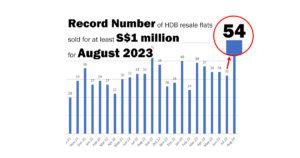 August Shatters Records: 54 HDBs Sold for Over a Million Each!
Enjoy what you have been reading? Join our mailing to get valuable insights delivered to your inbox today.
1 Comment